
Keyword Research Techniques
5 Min
What Role Do Long-Tail Keywords Play in SEO Compared to Short-Tail Keywords?
How long-tail and short-tail keywords differ, when each is the right choice, and how they map to content structure.
March 16, 2026

Co-Founder

Co-Founder
Contents
Every comparison of long-tail and short-tail keywords covers the same ground. Long-tail is specific and low volume, short-tail is broad and high volume. That comparison is accurate but incomplete. It describes what the two types are without explaining when each one is the right investment or how they function together inside a content strategy.
This article covers the characteristic differences, provides a decision framework for when to use each type, and connects both to content architecture. Choosing between long-tail and short-tail is one of the first decisions in content scaling, and getting it wrong wastes content resources on keywords you cannot win. It is part of our long-tail keyword strategy series within the broader keyword research techniques pillar.
What Is the Difference Between Short-Tail and Long-Tail Keywords?
The distinction comes down to three characteristics. Specificity, competition, and intent separate the two types and determine when each one is useful.
Length and specificity. Short-tail keywords are one to two words ("running shoes"). Long-tail keywords are three or more words with modifiers that narrow the query to a specific need ("best running shoes for flat feet on pavement"). The additional words do not just add length. They restrict the result set to a smaller, more defined audience.
Search volume and competition. Short-tail keywords generate higher search volume and attract more competition. Long-tail keywords generate lower volume individually but face significantly less competition. Semrush explains why: long-tail keywords are relevant to a smaller group of websites due to their specificity, and their low search volumes draw less marketing investment from competitors trying to rank. Both factors make long-tail keywords easier to win.
Intent and conversion. Short-tail keywords carry broad, ambiguous intent. Someone searching "CRM software" could be researching, comparing, buying, or writing a paper. Long-tail keywords carry specific intent. Someone searching "HIPAA-compliant CRM for behavioral health clinics" is a buyer with a defined need. EAB illustrates this in higher education: "MBA" is a short-tail term that attracts vague intent from researchers, students, and the generally curious. Specific program queries signal a prospective applicant with genuine enrollment interest. SureOak describes the same pattern across industries: the more precise the keyword, the closer the searcher is to knowing what they want.
This does not mean long-tail keywords always convert better in absolute terms. It means the intent behind them is easier to identify and match with the right content.
What Is the Difference Between Short-Tail and Long-Tail Strategy?
The characteristics above describe what the two types are. Strategy determines when each one is the right choice. Every SERP result for this topic lists the differences side by side and concludes with "use both." None provides a framework for deciding which to prioritize in a given situation.
Short-tail strategy is for brand awareness and category presence. Target short-tail keywords when you need visibility for a broad topic and have the domain authority to compete. These keywords attract researchers and browsers. They build awareness but not immediate conversions. In a content strategy, they are pillar-page and sub-pillar targets: the broad terms that define the topic your site covers.
Long-tail strategy is for conversion and topical depth. Target long-tail keywords when you want to attract searchers with specific needs and build cluster authority around a topic. These keywords attract decision-stage users. They generate fewer visits individually but higher conversion rates. In a content strategy, they are spoke-level targets: the specific angles that support a broader pillar topic.
When short-tail is genuinely the right investment. No SERP result makes the honest case for prioritizing short-tail keywords. Here it is: if you are an established brand with high domain authority and your goal is category visibility rather than direct conversions, short-tail keywords are the primary target. Salesforce targeting "CRM software" is defending territory it already owns. A startup trying to rank for the same term is fighting a losing battle with neither the domain authority nor the content depth to compete. The strategic value of short-tail keywords scales with your ability to win them.
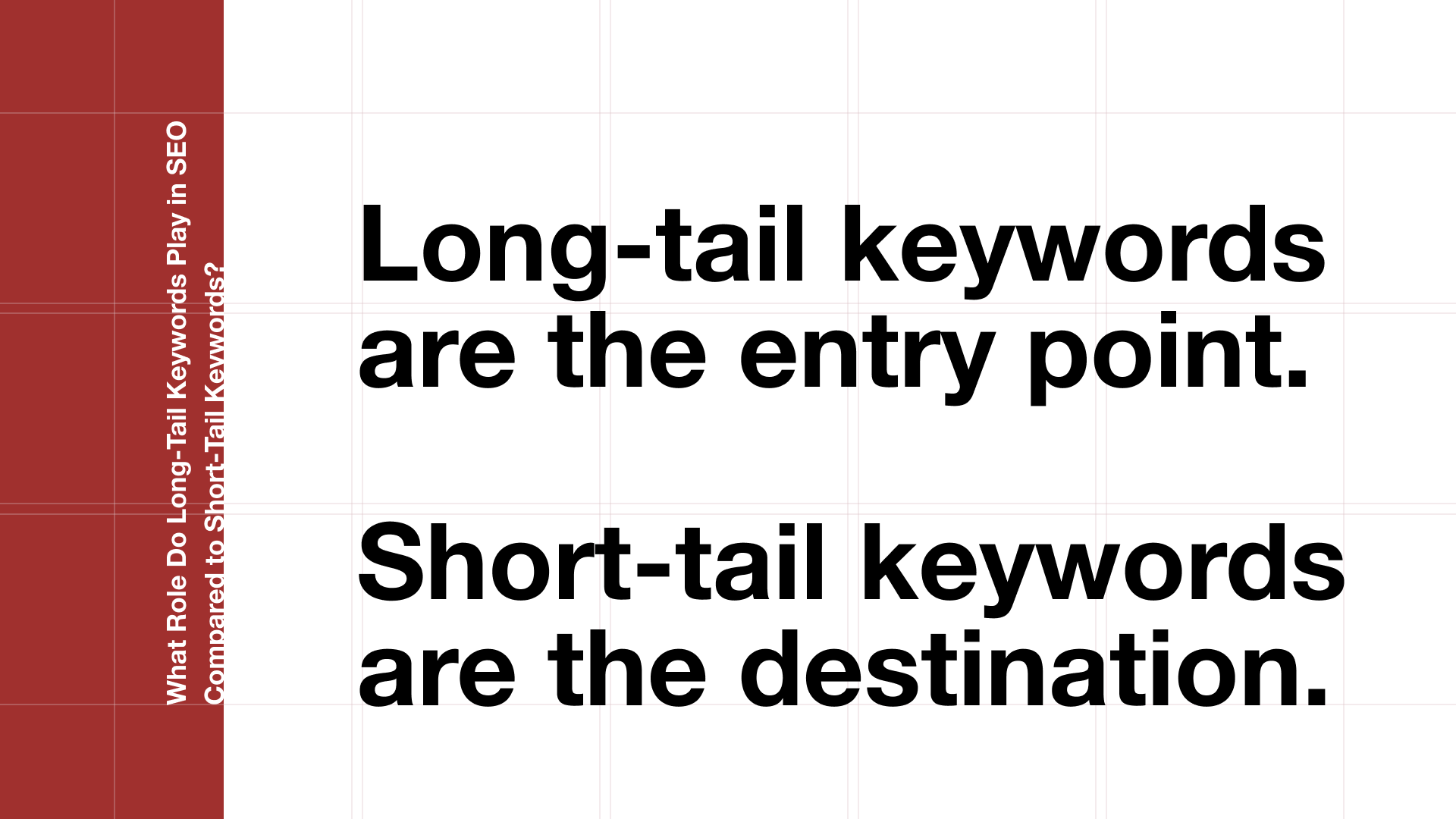
Sequencing matters. WeAreTG recommends starting with long-tail keywords to build initial rankings and authority, then gradually targeting more competitive short-tail terms as domain authority grows. e-innovate frames this as striking a balance between the two types based on specific market conditions. Both point to the same underlying principle: long-tail keywords are the entry point, short-tail keywords are the destination.
How Long-Tail and Short-Tail Keywords Work Together
The distinction between long-tail and short-tail maps directly to how content structures work in practice.
Short-tail keywords become pillar page and sub-pillar targets. They define the broad topic. Long-tail keywords become spoke articles that cover the topic from specific angles. Each spoke builds authority for its parent, and collectively the cluster earns visibility for the competitive short-tail term that no single page could win alone.
This is not a theory. It is how this article works. This page targets a long-tail comparison keyword, its parent sub-pillar targets "long-tail keyword strategy," and the pillar page targets "keyword research techniques." Each level sits at a different point on the long-tail to short-tail spectrum, and each supports the one above it.
The sequencing from long-tail to short-tail also applies at the content architecture level. Build spokes first to establish authority on specific long-tail topics. Then publish sub-pillars that consolidate those spokes into broader themes. Then target the competitive short-tail keyword with a pillar page that inherits the depth and authority from everything below it. The architecture does the work that no single page could do on its own.
forecast.ing helps teams decide which long-tail topics to build spokes around. The platform tracks emerging topics across social discussion, news coverage, AI citations, and competitor content alongside search volume, so a long-tail topic generating conversation but showing zero volume in keyword tools still surfaces in the weekly analysis. That visibility matters for the sequencing argument above. Teams that identify long-tail demand early and build spoke content around it position the cluster to rank for broader short-tail terms once search volume matures.
For a broader look at how long-tail keywords fit into an SEO strategy, see our guide to long-tail keyword strategy within the keyword research techniques pillar.
Frequently Asked Questions
Short-tail keywords are one to two words with high volume and broad intent. Long-tail keywords are three or more words with lower volume, less competition, and more specific intent. The additional words narrow the audience to people who know what they need, which typically leads to higher conversion rates.
Start with long-tail keywords to build initial rankings and authority, then gradually target more competitive short-tail terms as your domain grows. Long-tail keywords are the entry point because competition is lower and ranking is achievable. The broader short-tail terms become winnable after the cluster of supporting content has established topical authority.
Short-tail keywords become pillar page targets that define the broad topic. Long-tail keywords become spoke articles covering specific angles. Each spoke builds authority for its parent, and collectively the cluster earns visibility for the competitive short-tail term that no single page could win alone.
You might also like
Browse all articles
Keyword Research Techniques
5 Min
Is Keyword Research Still Important in the AI Era?
What has changed about keyword research, what has not, and why the process matters more now than the keywords.

Keyword Research Techniques
11 Min
Keyword Research Techniques for Semantic and AI Search
The five keyword research techniques that work after the semantic shift, and how to connect them into a content strategy.